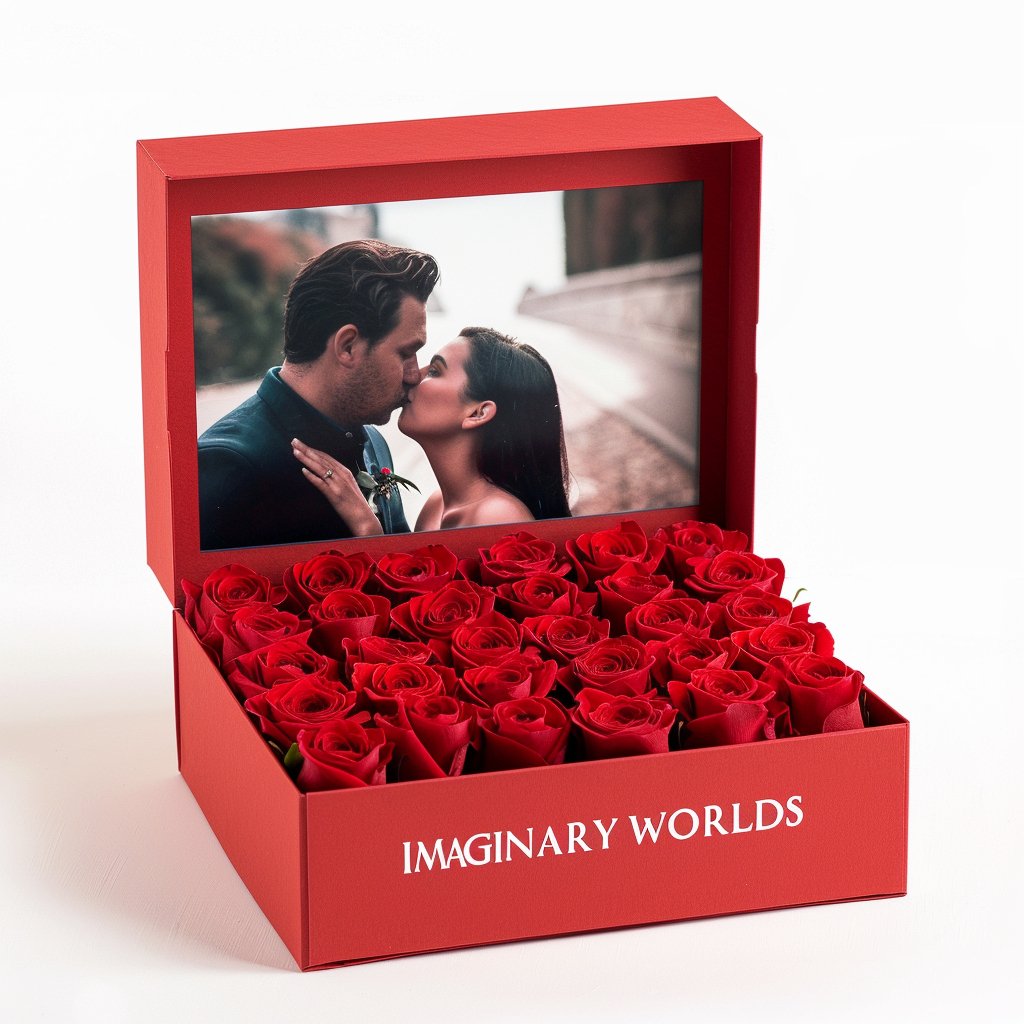
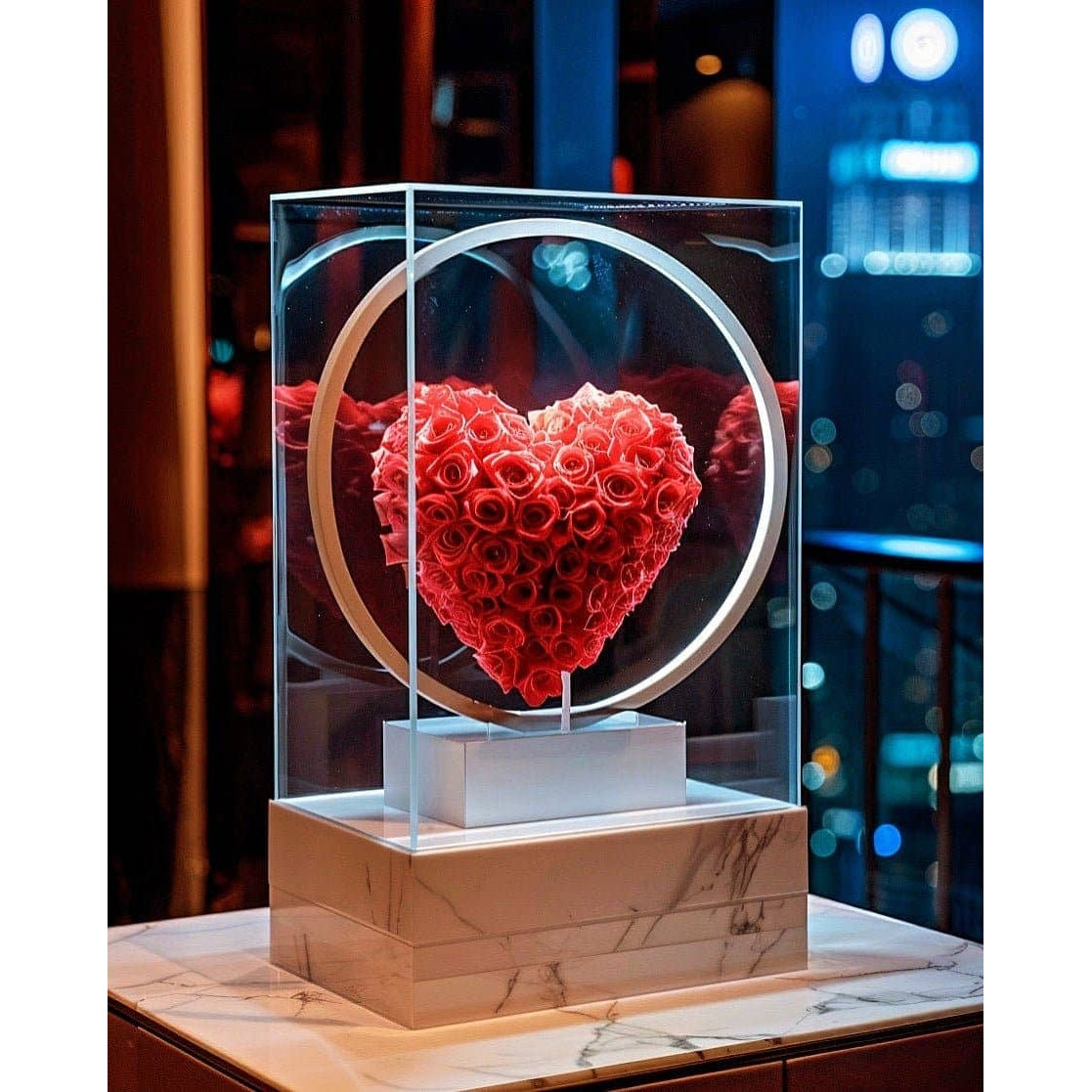
The material transformation behind a rose that remains soft, dimensional, and ready for design.
By Imaginary Worlds Editorial
Preserved Roses · The IW Journal
Preserved roses are made from real, fresh roses. In broad terms, producers select blooms at a suitable stage, remove or exchange the water held in their tissues, introduce a stabilizing solution—often using glycerol or related glycols—and then dry and finish the flower under controlled conditions. Color may be reinforced or replaced during treatment because dehydration and chemical processing can alter the original shade.
That is the short answer. The exact solvents, concentrations, temperatures, timing, and coloring systems vary by producer and rose variety. There is no single universal recipe, and this article describes documented industry methods rather than an unpublished Imaginary Worlds preservation formula.
Preserved is not the same as dried
Preserved rose
A fresh rose is chemically stabilized by exchanging or replacing moisture within its tissues. The aim is to retain a supple feel and three-dimensional form.
Dried rose
Water is removed by air, desiccant, heat, or freeze-drying. The result can retain its shape beautifully, but petals are usually lighter, crisper, and more brittle.
The preserved rose process, step by step
1. Selection. Preservation begins before any solution is used. Roses must be fresh, structurally sound, and free from bruising or moisture damage. Documented horticultural guidance for decorative preservation consistently favors material collected in excellent condition; an imperfect petal will not become perfect through treatment.
2. Preparation and dehydration. Commercial methods may shorten the stem and place the bloom into a treatment bath, or partially dehydrate and decolorize the flower before impregnation. Removing tissue water matters because it opens the way for a stabilizing liquid to enter the flower. Patented processes use different solvents and sequences, so terms such as ‘dehydration’ and ‘replacement’ describe a family of methods rather than one fixed procedure.
3. Impregnation or moisture replacement. A preservation solution moves into the plant tissue. Glycerol, polyethylene glycol, or related compounds appear in documented methods because they can help the treated material remain flexible instead of drying to a crisp structure. Some processes rely on uptake through a short stem; others immerse or impregnate previously dehydrated material.
4. Color treatment. A rose can lose or shift color during processing. Dyes may therefore be included in the treatment solution or applied during a separate coloring stage. This makes both natural-looking shades and colors uncommon in fresh roses possible, but it also means the finished color should not always be read as the bloom’s original field color.
5. Drying and finishing. After treatment, excess solution must be removed and the rose dried or conditioned until it is stable enough to handle. Finishing can include inspection, careful shaping, trimming, and selection for a particular design. Those final choices belong to object-making and arrangement; they are distinct from the preservation chemistry itself.
Preservation does not stop time. It changes the material conditions under which a flower ages.
Why preserved roses last
A fresh cut rose continues to transpire, lose water, and undergo cellular and microbial change. Preservation interrupts much of that ordinary cycle by removing water and stabilizing the tissues with less volatile materials. With less free moisture and no need to remain biologically active in a vase, the flower changes much more slowly.
Longevity is not unlimited. One rose-specific patent reports retention for at least a year under its defined treatment, while commercial claims vary widely. The more responsible conclusion is that a well-made preserved rose can remain presentable far longer than a fresh cut rose, but its useful life depends on the treatment, construction, climate, handling, and standard of appearance expected.
What preservation changes
The finished rose is still botanical material, but it is no longer a living cut flower. It does not grow, open normally, take up vase water, or keep the same fragrance cycle. Texture, weight, translucency, scent, and color may differ from those of a fresh bloom. Small variations between flowers remain because the source material was grown, not molded.
This distinction matters. A preserved rose is valuable not because it is frozen in a biologically perfect state, but because its recognizable form and tactile presence have been carried into a slower, more stable material life.
Why methods and results vary
Rose preservation is sensitive to both biology and process control. Cultivar, petal thickness, maturity at harvest, stem length, hydration, and pre-existing damage can change how evenly a flower dehydrates and accepts treatment. The same solution may not produce the same texture or color in every bloom. Producers therefore work with tolerances and selection: some treated roses will be suitable for prominent placement, while others may be rejected or used where small variations are less visible.
The chemical route also matters. A method based on stem uptake is not identical to one using staged solvent dehydration, immersion, vacuum treatment, or freeze-drying. Each can affect flexibility, shrinkage, color, scent, and production time differently. For that reason, a label such as ‘preserved rose’ describes the finished category, not enough information to reconstruct the manufacturer’s complete method.
A credible description should name only what is documented. It is reasonable to say that preserved roses are real flowers whose moisture and tissues have been stabilized. It is not reasonable to assume that every producer uses food-grade ingredients, the same glycerin concentration, a proprietary sustainable process, or an identical expected lifespan.
How to care for preserved roses
Keep preserved roses indoors, dry, and away from direct sun, strong heat, and frequent handling. Do not place them in water or mist the petals. Humidity can soften preserved plant material or draw treatment compounds back toward the surface; ultraviolet light and heat can accelerate fading and brittleness. For exposed designs, remove dust with a very soft, dry brush or gentle air rather than liquid cleaner.
A protective case can reduce dust and accidental contact, but it does not make the rose immune to climate. Follow the care guidance supplied with the finished object, since adhesives, electrical components, enclosures, and companion materials may introduce their own requirements.
Rose light after dark
From preserved material to designed object
Preservation creates a material that can be composed over a longer timescale than a fresh arrangement. A rose may be set into a keepsake box, arranged around light, or repeated across a sculptural surface without being designed for a few days in water.
At Imaginary Worlds, the documented public evidence concerns this design stage: preserved roses appear in memory-led rose boxes, illuminated objects, and floral forms. We do not currently publish enough verified workshop documentation to describe the upstream preservation of every rose as an IW-specific process. The distinction is deliberate: the general preservation method belongs to the wider floral industry; the selection, composition, structure, and emotional purpose of the finished object are where the IW design language becomes visible.